Source thermal paper cash register sticker for POS, ATM, and Retail
Compare 30 listings for thermal paper cash register sticker from Guangzhou, Suzhou, and other origins. Options include 55-60 GSM weights, various roll sizes, and customization for POS machines, cash registers, and ATMs with delivery in 7-10 days.
Key considerations
Products List


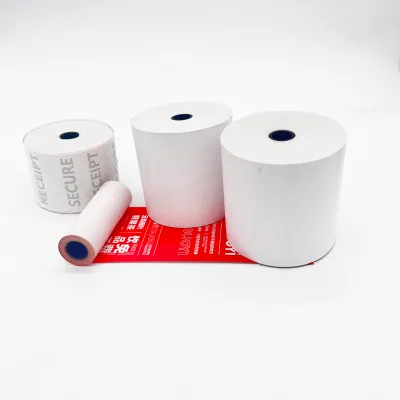


Comprehensive Sourcing Guide
Thermal Paper Cash Register Sticker Sourcing Guide
Procuring thermal paper for cash register systems requires a nuanced understanding of material science, supply chain logistics, and operational compatibility. Unlike standard offset or laser printing media, thermal paper relies on a heat-sensitive coating that reacts to the thermal print head of point-of-sale (POS) equipment. This fundamental difference dictates specific sourcing criteria, from grammage and core material to packaging integrity and storage conditions. Buyers must navigate a market where specifications vary significantly between suppliers, often blurring the lines between receipt paper, fax paper, and specialized thermal labels. The following guide provides a structured approach to evaluating suppliers, verifying technical attributes, and mitigating procurement risks associated with this essential retail and hospitality consumable.
The core keyword "thermal paper cash register sticker" often conflates two distinct product categories: continuous receipt rolls for POS machines and adhesive labels for tagging or inventory management. While both utilize thermal technology, their physical forms, adhesive properties, and end-use applications differ. Receipt paper is typically supplied in rolls with specific diameter and core size constraints to fit existing printer hardware, whereas thermal stickers require backing paper, adhesive formulations, and die-cutting precision. Understanding this distinction is critical before initiating supplier inquiries, as it determines whether the buyer is sourcing high-volume continuous media or specialized label stock. Misalignment in these definitions can lead to compatibility issues, printer jams, or suboptimal print quality, ultimately disrupting daily operations.
Product Scope and Observed Listing Signals
Market listings for thermal paper reveal a wide spectrum of product attributes, ranging from basic opaque rolls to high-brightness, waterproof variants. Observed data indicates a price range of $0.01 to $1.00 per unit, with minimum order quantities (MOQs) varying from 1 to 5,000 units. This disparity suggests a fragmented market serving both small-scale retailers and large industrial distributors. Buyers should note that "opaque" transparency is a common baseline, but higher-end products may offer enhanced brightness levels, such as 92-100%, which improve print contrast and readability. Additionally, some listings specify "waterproof" capabilities, a feature essential for environments where receipts or labels may be exposed to moisture, such as cold storage or outdoor kiosks, while others remain standard paper-based products.
The observed product models and specifications highlight significant variability in core materials and layering. Common core materials include paper and plastic, with core sizes often standardized to fit specific printer mechanisms. Layering is generally described as "basic level," indicating a single-layer thermal coating rather than complex multi-ply structures used in carbonless copy paper. Some listings specify "fax paper" type attributes, which may indicate a different chemical formulation or coating thickness compared to standard POS receipt paper. Buyers must carefully cross-reference these listing signals with their actual printer requirements, as assumptions based on generic product titles can lead to purchasing incompatible media. The presence of OEM printing options and customizable roll sizes further complicates the sourcing landscape, requiring clear communication of technical needs.
Technical Specifications to Verify
Verifying the grammage and brightness of thermal paper is essential for ensuring optimal print quality and printer longevity. Standard grammages observed in the market include 55 GSM and 60 GSM, with brightness levels ranging from 80% to 100%. Higher brightness values, such as 98-100%, typically correlate with superior print contrast and a more professional appearance for customer receipts. However, higher brightness does not always equate to better durability; buyers should verify the smoothness and coating uniformity to prevent uneven printing or smudging. The minimum smoothness requirement of 200 microns is a critical parameter, as rough surfaces can accelerate wear on the thermal print head, leading to costly maintenance and downtime.
Compatibility with POS hardware is another paramount technical consideration. Roll dimensions, including width and diameter, must align precisely with the printer’s specifications. Common widths observed include 80mm, 76mm, 57mm, and 44mm, with 80mm being a standard for many modern cash register machines. The core material, whether paper or plastic, must also match the printer’s spindle requirements to ensure smooth feeding. Additionally, buyers should inquire about the print longevity, with some products offering a print retention period of 3-5 years. For applications requiring longer-term archival, such as financial records or legal documents, buyers may need to specify higher-quality thermal paper with enhanced chemical stability to prevent fading over time.
Compliance and Safety Documentation
While specific certification statuses are not universally guaranteed across all listings, buyers should prioritize suppliers who can provide relevant safety and quality documentation. The presence of SGS standards in some listings indicates a commitment to third-party verification of product quality and safety. Buyers should request certificates of analysis (CoA) to verify the chemical composition of the thermal coating, ensuring it is free from harmful substances such as bisphenol A (BPA) or bisphenol S (BPS), which are increasingly regulated in food-contact and consumer-facing applications. Although FSC certification is mentioned in background data, its applicability to thermal paper depends on the source of the wood pulp used in the base paper, and buyers should verify this if sustainability is a corporate priority.
Safety documentation should also cover the handling and storage requirements of the thermal paper. Since thermal paper is sensitive to heat, light, and friction, proper storage conditions are crucial to maintaining product integrity. Buyers should ensure that suppliers provide clear guidelines on storage temperature and humidity to prevent premature activation of the thermal coating, which can result in blank or discolored prints. Additionally, for products used in food or pharmaceutical industries, compliance with relevant food-contact regulations is essential. Buyers should verify that the paper and any adhesives used in thermal stickers meet local regulatory standards for indirect food contact, ensuring that no harmful chemicals migrate from the paper to the product.
Cost Drivers and Commercial Terms
The cost of thermal paper is influenced by several factors, including raw material prices, production volume, and customization requirements. Observed MOQs range from 1 to 5,000 units, allowing for flexibility in order sizes but potentially impacting unit costs for smaller orders. Buyers should negotiate volume discounts for larger, recurring orders to optimize procurement costs. Customization options, such as OEM printing or specific roll sizes, may incur additional setup fees or higher per-unit costs. It is advisable to clarify all potential charges, including mold fees for custom die-cutting or printing plates, before finalizing the purchase agreement to avoid unexpected expenses.
Delivery lead times and payment terms are also critical commercial considerations. Typical delivery dates range from 7 to 10 days, but this can vary based on order volume and supplier capacity. Buyers should establish clear lead time expectations and contingency plans for urgent orders to prevent stockouts. Payment terms should be negotiated to align with cash flow requirements, with options such as letters of credit or open account terms available for established relationships. Additionally, buyers should consider the total cost of ownership, including shipping costs and potential tariffs, especially when sourcing from international suppliers. Transparent communication regarding these commercial terms helps build a stable and predictable supply chain.
Supplier Qualification and Quality Control
Evaluating supplier qualifications is essential to ensure consistent product quality and reliable service. Buyers should verify the supplier’s manufacturing capabilities, including production capacity, quality control processes, and experience in the thermal paper industry. Suppliers with a global market presence, as indicated by "Worldwide" market attributes, may offer more robust logistics and support networks. It is advisable to request samples for testing before placing large orders to assess print quality, adhesion (for stickers), and overall product consistency. Suppliers who provide detailed technical specifications and responsive customer support are often better equipped to handle complex procurement needs.
Quality control measures should be integrated into the procurement process to mitigate risks associated with product defects. Buyers should establish clear quality acceptance criteria, including print clarity, roll alignment, and packaging integrity. Regular audits or third-party inspections may be necessary for high-volume purchases to ensure compliance with agreed-upon standards. Additionally, buyers should monitor supplier performance metrics, such as on-time delivery rates and defect rates, to identify potential issues early. Building a strong relationship with qualified suppliers fosters trust and collaboration, leading to better pricing, priority service, and continuous improvement in product quality.
Long-Term Procurement Checks
Sustainable procurement practices should be considered for long-term success, including the evaluation of environmental impact and supply chain resilience. Buyers should assess the supplier’s commitment to sustainability, such as the use of recycled materials or eco-friendly production processes. Although FSC certification is not universally applicable, verifying the source of wood pulp can contribute to responsible sourcing initiatives. Additionally, buyers should diversify their supplier base to mitigate risks associated with single-source dependencies, ensuring business continuity in the event of supply disruptions. Regularly reviewing and updating procurement strategies helps adapt to market changes and evolving customer expectations.
Continuous improvement in procurement processes is vital for maintaining competitiveness and operational efficiency. Buyers should leverage data analytics to track spending patterns, identify cost-saving opportunities, and optimize inventory levels. Implementing automated ordering systems can reduce administrative burdens and minimize the risk of stockouts. Furthermore, fostering open communication with suppliers encourages innovation and collaboration, leading to the development of new products or services that meet evolving market demands. By focusing on long-term relationships and strategic procurement, buyers can secure a reliable supply of high-quality thermal paper for their cash register and POS systems.
FAQs
What customization options are available for thermal paper cash register sticker?
Customization is available for this thermal paper cash register sticker. Buyers can request specific roll sizes, colors like pure white or OEM printed options, and various packing methods such as bulk or shrink packs to meet unique operational needs.
Which specifications define the standard thermal paper cash register sticker models?
Standard models include dimensions like 80mm by 80mm or 80mm by 80mm thermal paper. The product also supports widths lower than 1080mm and offers customizable roll sizes to fit various POS and Epson printer requirements effectively.
How long is the delivery time for thermal paper cash register sticker orders?
The delivery date for these orders is typically 7 to 10 days. This lead time applies to the supply chain originating from Guangzhou or Suzhou in China, ensuring timely fulfillment for worldwide markets without significant delays.
Can thermal paper cash register sticker be customized for specific industrial uses?
Yes, the product supports industrial uses in food, pharmaceutical, apparel, and agriculture sectors. It features a basic layered structure with soft hardness and is available in plain or printed formats to suit diverse commercial applications.
What are the material properties of the thermal paper cash register sticker?
The core material consists of paper or plastic, while the paper itself is wood pulp based. It offers a basic weight of 55 to 60 GSM with brightness ranging from 92 to 100 percent and is generally not waterproof unless specified.
Which packaging methods are used for thermal paper cash register sticker shipments?
Packaging options include bags, film, bulk packs, shrink packs, and individually packed units. The sealing method often involves flat bag packaging, and the product standard allows for any size customization to ensure secure transport.